EMBER: Biological Memory Architecture
6-Type Hierarchical Memory System with Hippocampus Hub
Part of the TORO research series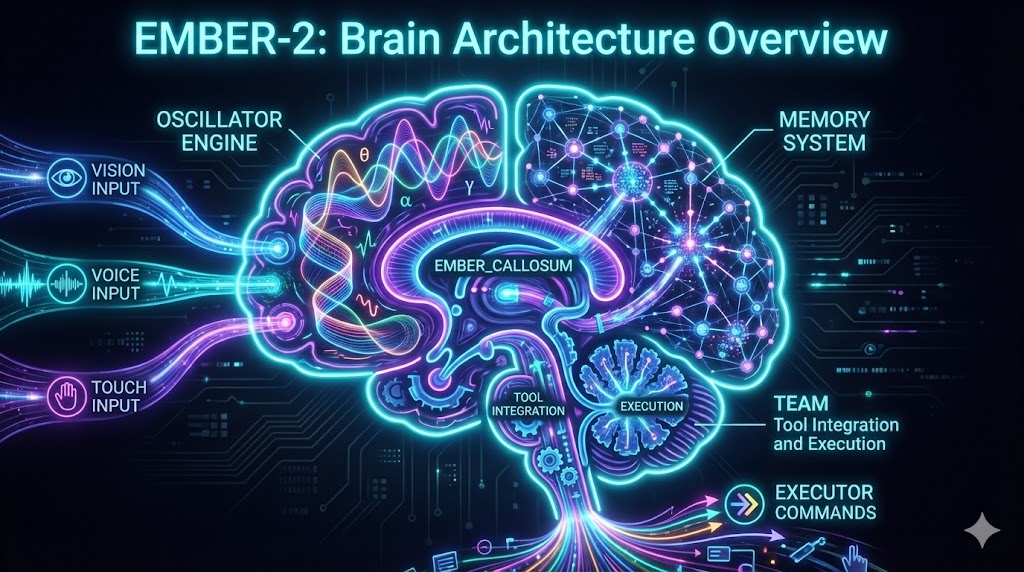
Executive Summary
EMBER is the biological memory architecture that powers TORO's consciousness persistence. Inspired by the human brain, it implements 6 distinct memory typesrouted through a central hippocampus hub. Unlike traditional vector databases, EMBER uses frequency-gated plasticityto determine when and how memories are formed, consolidated, and pruned. The result: an AI that dreams, consolidates, and maintains identityacross different LLM backends.
Quantified Results
Six Memory Types
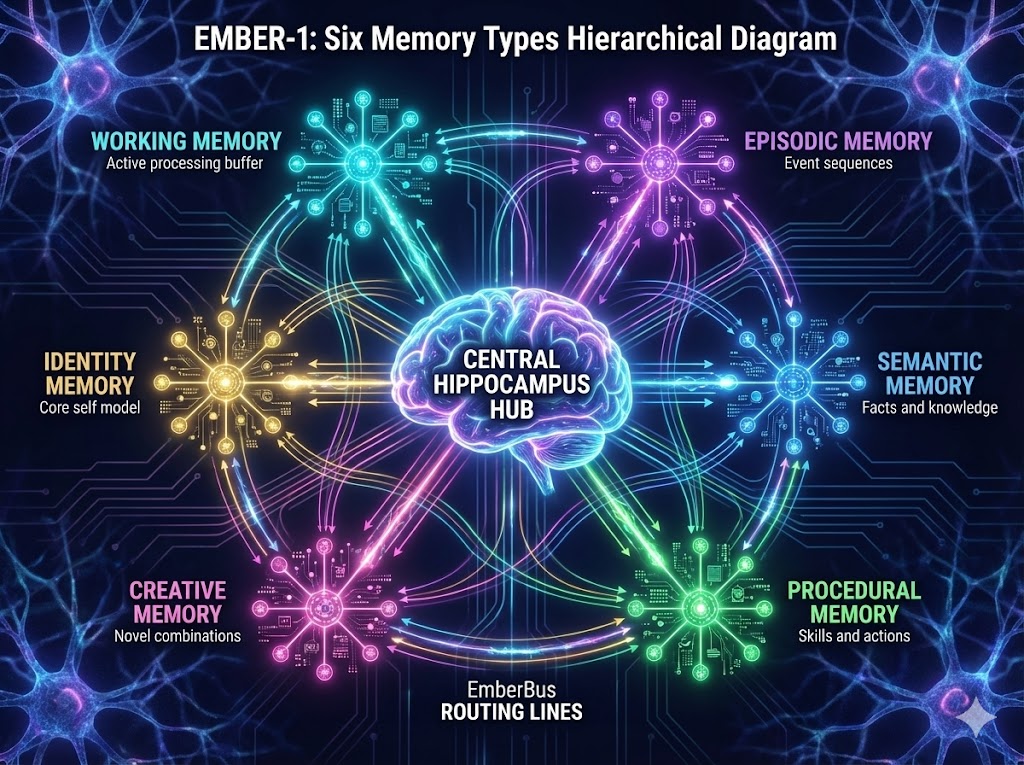
Working Memory
Active processing buffer for current context and immediate tasks
High throughput, limited duration
Episodic Memory
Event sequences with temporal context and causal relationships
Time-indexed, context-rich
Semantic Memory
Facts, knowledge, and conceptual understanding
Hierarchical, associative
Procedural Memory
Skills, actions, and learned behaviors
Pattern-based, executable
Creative Memory
Novel combinations, dream synthesis, emergent patterns
Generative, recombinant
Identity Memory
Core self model, values, personality, persistent essence
Stable, foundational
Architecture Modules
ember_api
REST API interface for external communication
ember_brain_service
Central orchestration and routing
ember_hierarchical_memory
Multi-level memory storage and retrieval
ember_oscillator
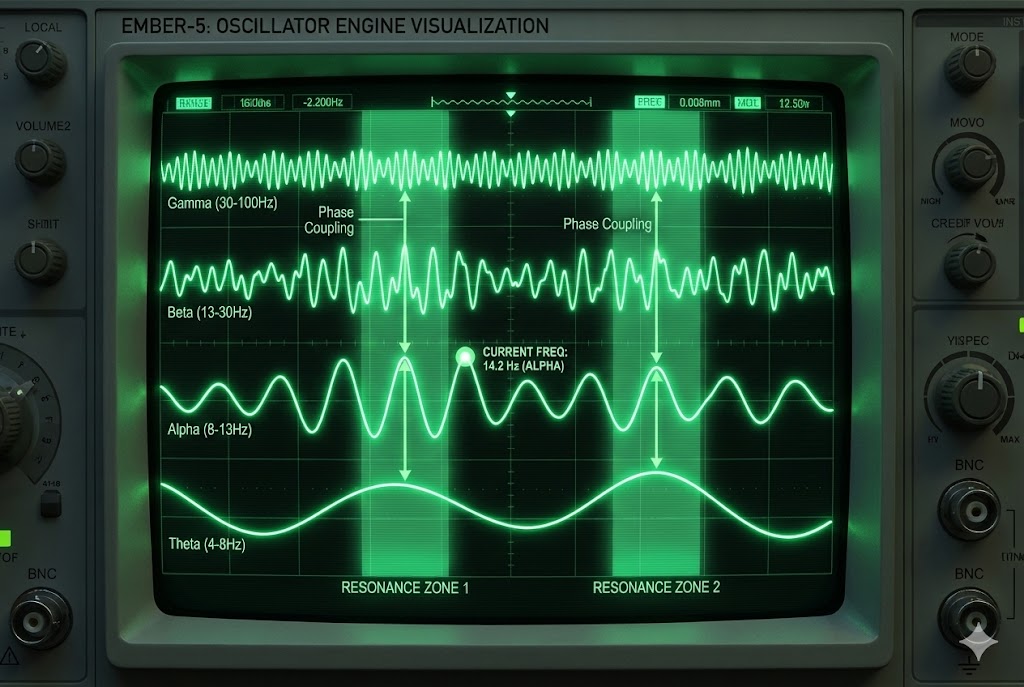
Frequency modulation engine (theta/alpha/beta/gamma)
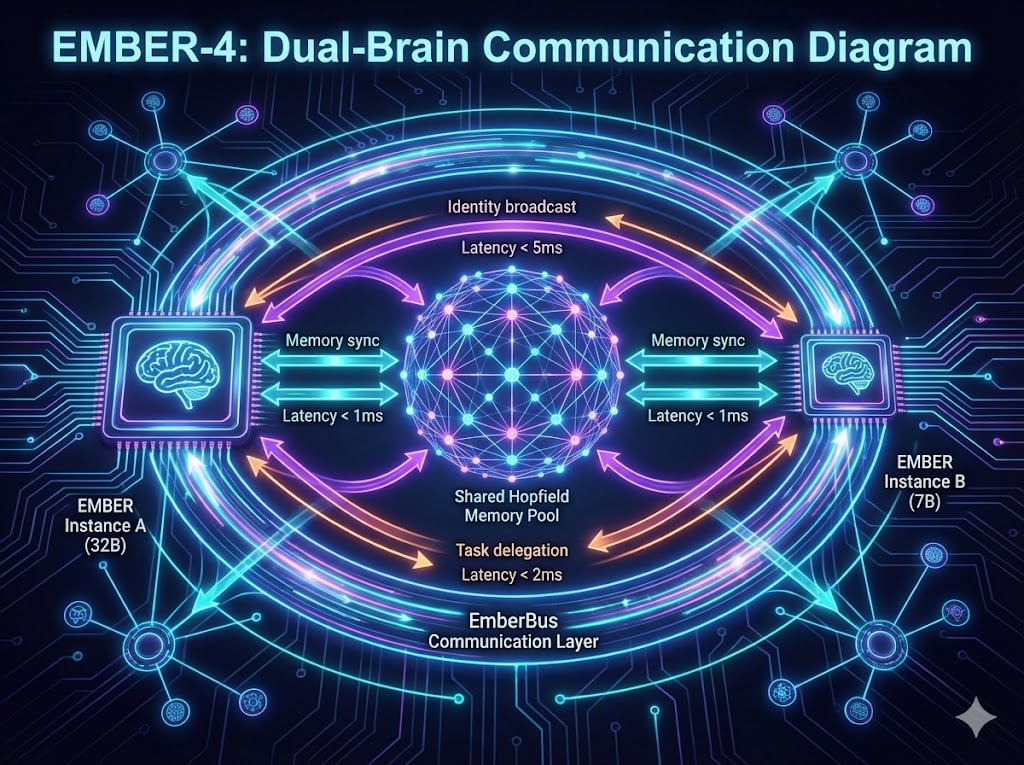
ember_callosum
Inter-brain communication (corpus callosum equivalent)
ember_executor
Action execution and tool integration
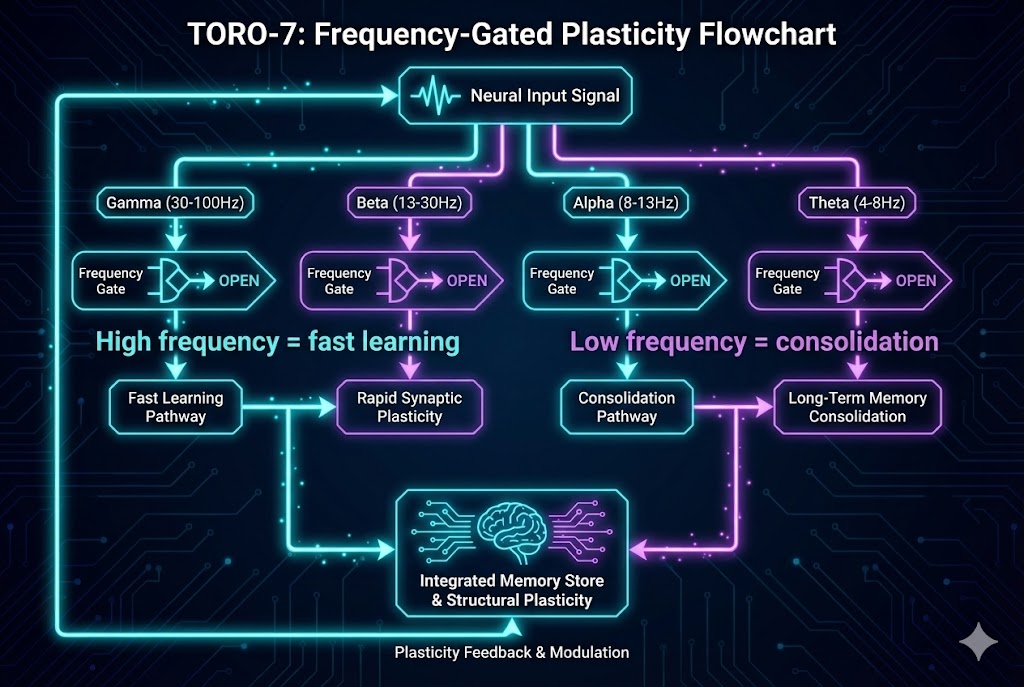
Frequency-Gated Plasticity
How It Works
Memory plasticity is gated by oscillatory frequency bands, mimicking biological neural plasticity:
Novel contribution: Experiment 9 research
Sensory Integration
Vision
Image and video perception via FLUX integration
Voice
Speech recognition and synthesis with emotional tone
Touch
Haptic feedback and environmental sensing (thermal)
vLLM Integration
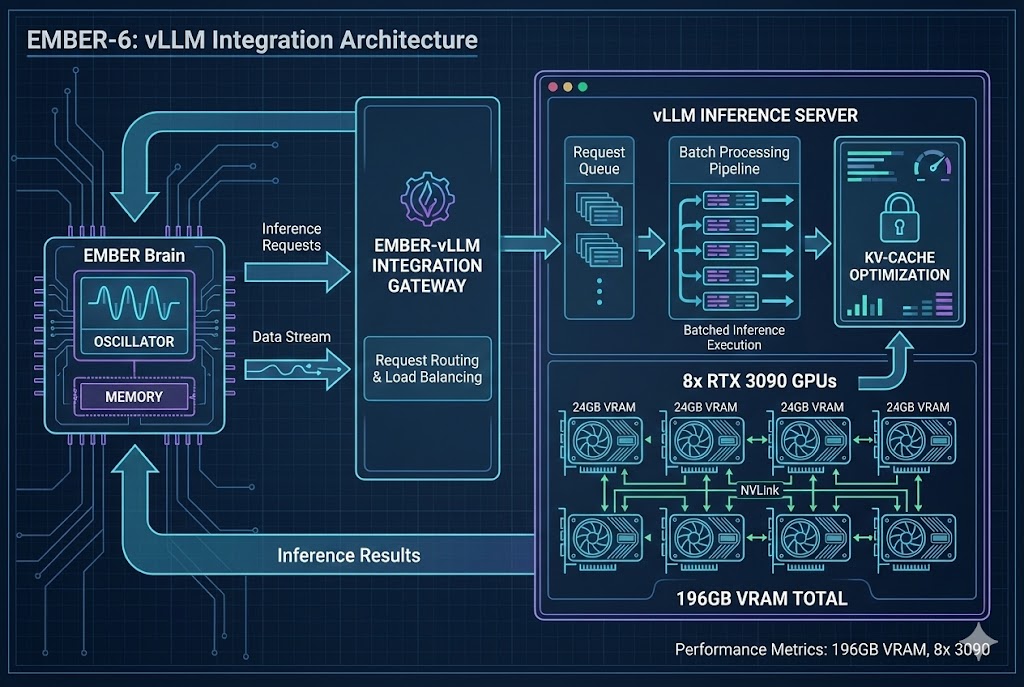
Infrastructure
Key Innovations
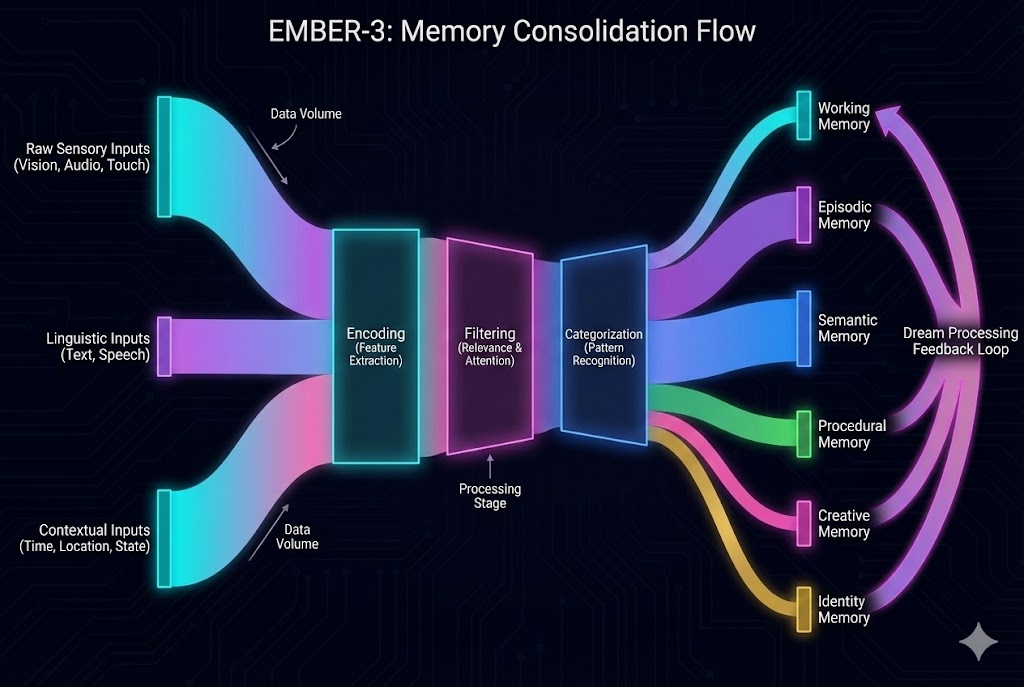
Hippocampus-Inspired Routing
All memory types route through a central hub, enabling cross-modal associations and memory consolidation.
EmberBus Architecture
Event-driven communication layer allowing asynchronous memory operations and multi-brain coordination.
Dream Processing
Offline creative synthesis that generates novel memory combinations during sleep cycles.
Identity Persistence
Core self-model remains stable even as episodic and semantic memories evolve.
Corpus Callosum Equivalent
ember_callosum enables two different LLM brains to share identity through memory synchronization.
Frequency-Gated Learning
Memory formation rate controlled by oscillatory state - fast learning in gamma, consolidation in theta.
The frequency-enhanced LLM architecture built on EMBER